Tuesday

September Book Choice

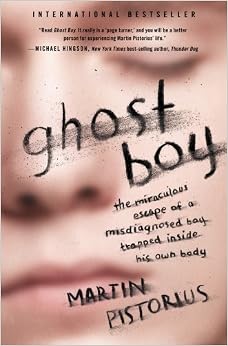
Our September Book Choice is a true story called "Ghost Boy" by

here is an overview of the story:


Image result for ghost boy bookMartin Pistorius was a happy, healthy boy – until at the age of 12 a mystery illness left him in a virtual coma. Doctors never found the cause of his condition – even his mother gave up hope.

Yet in 1992, when Martin was 16, a miracle happened: he started to regain consciousness. But he was still trapped in his broken body, unable to communicate.

Slowly, however, he regained some control of his head and arms, and began to use a computer to write messages and operate a synthetic voice. Here, Martin tells the story of his remarkable recovery – and how he came to find love, a home and a job in England...


Seattle Beehive Trip and Book Group Dinner

Optional August Book Choice

We usually take August off but this year a few of us decided to journey up to Seattle to visit with Beehive founder Beth...so we picked a Seattle centered novel
Where'd You Go Bernadette by Maria Semple

 San Jose Mercury News Review-

"Where'd You Go, Bernadette," a novel by Maria Semple, is a challenging book to review -- or describe. It can be referred to as an epistolary novel (the story is told through e-mails, letters and notes); it can be described as a window into Seattle, where Microsoft, rain, coffee and obligation of community involvement permeate lives like the fog above Mount Rainer. But neither of those descriptions captures the delightful cleverness of the story.

The simple version of the plotline is: Bernadette Fox is missing. She is the mother of Balakrishna, "Bee" Branch and the wife of Elgin Branch, a Microsoft rock star. Bernadette is also an eccentric, creative genius who neither fits in with the Seattle vibe, nor the parents of her daughter's classmates. When Bee learns of her mother's disappearance, she reviews all documentation relating to Bernadette for clues. The novel is a compilation of those letters, e-mails, and reports unfolding the story of events which led to Bernadette fleeing Seattle. Any more detail divulges too much.

July Book Dinner 2015

Our July book group dinner was hosted by Lori at her lovely home, where we enjoyed a round table discussion, lots of great food choices and Lori provided maps and support text, making this a very educational and lively gathering.

July Book Choice

Our July Book Choice is the Sandcastle Girls by Chris Bohjalian.

Here is a brief overview of this novel:

The Armenian genocide during World War I is the subject of Chris Bohjalian’s 14th novel, “The Sandcastle Girls.” Inspired by his grandparents’ background, the author explores the suffering and atrocities of that time with astounding precision, compassion and grace.

“How do a million and a half people die with nobody knowing?” ponders Laura Petrosian, the book’s modern-day narrator. The answer, she will discover, is really very simple: “You kill them in the middle of nowhere.”
The novel covers several decades...

Bohjalian deftly weaves the many threads of this story back and forth from past to present, from abuse to humanity, from devastation to redemption. His ability to add irony and wit makes the contrasting horrors even more intense. And his unblinking descriptions of atrocities are staggering: Nevart “has heard stories of . . . women who were impaled on sharp stakes and swords, the pommel and grip planted into the ground so the blade rose like an exotic but lethal plant.” Rather than repelling the reader, Bohjalian’s account makes the gruesome truth utterly riveting.

April 24, 2015, will mark the 100th anniversary of the Armenian genocide. Yet in some circles, controversy over the nature of this crime still rages. Just this month, relations between France and Turkey were tested again by President Francois Hollande’s commitment to making it illegal to deny that the killing of Armenians by Ottoman Turks was genocide. Bohjalian’s “The Sandcastle Girls” may be a novel, but, based on his family history, it is a valuable and powerful piece of evidence pointing to the undeniable.


Washington Post

June 2015 Book Dinner

Simone hosted the first book group meeting for the summer of 2015 in her charming Cottage Garden.
We had a San Francisco inspired feast and lots of great discussions. The night was still but the group was sparking. I went home and watched the classic Bogart movie of the book and found it to be very true to the text.

June 2015 Book Club Choice

This month we have decided to read a classic The Maltese Falcon by Dashiell Hammett
Here is an overview and what critics have said about this novel...

The Maltese FalconA treasure worth killing for. Sam Spade, a slightly shopworn private eye with his own solitary code of ethics. A perfumed grafter named Joel Cairo, a fat man name Gutman, and Brigid O’Shaughnessy, a beautiful and treacherous woman whose loyalties shift at the drop of a dime. These are the ingredients of Dashiell Hammett’s coolly glittering gem of detective fiction, a novel that has haunted three generations of readers.
From the Publisher
“Dashiell Hammett . . . is a master of the detective novel, yes, but also one hell of a writer.” –The Boston Globe
The Maltese Falcon is not only probably the best detective story we have ever read, it is an exceedingly well written novel.” –The Times Literary Supplement(London)
“Hammett’s prose [is] clean and entirely unique. His characters [are] as sharply and economically defined as any in American fiction.” –The New York Times
New York Times Book Review
If the locution 'hard-boiled' had not already been coined it would be necessary to coin it now to describe the characters of Dashiell Hammett's latest detective story. . . there is plenty of excitement. -- Books of the Century; New York Times review, February 1930

Book Club Dinner

Deborah hosted our early spring book club dinner at her classic high water Victorian. Lots of lively conversation and tasty foods, the group was small but the spirit was big!

March April Book Choice


Our March April Book Choice is the first novel my author Antony Marra, " A Constellation of Vital Phenomena" 
Overview Washington Post Ron Charles-

The book begins with a sentence that forecasts both the horror and the whimsy ahead: “On the morning after the Feds burned down her house and took her father, Havaa woke from dreams of sea anemones.” Havaa, we learn, is 8 and now almost certainly orphaned. “She had the pale, waxen skin of an unripe pear,” Marra writes. Her father, who nurtured her curiosity with extravagant affection, was an arborist who had lost his fingers in a previous encounter with the Feds and a pair of bolt cutters. When he was gagged with duct tape and bundled away for good, Havaa avoided assassination by sneaking out of the house and hiding in the snow. But those thugs will be back, fulfilling a new order to murder the family members of anyone suspected of sympathizing with rebel forces.

The complicated moral hero of this tale is an incompetent peasant doctor named Akhmed, who lives across the street. More comfortable drawing portraits than blood, he is determined to save his old friend’s daughter, though “she seemed an immense and overwhelming creature whom he was destined to fail.” His only choice is to spirit Havaa out of the village, where the sole remaining career choices are running guns for the rebels or informing for the Russians. Acting on a rumor from a refugee who passed through months earlier, he takes Havaa to an all-but-abandoned hospital in a nearby town that looks “like a city made of shoeboxes and stamped into the ground by a petulant child.”

February March Book Club Dinner

Molly hosted our March gathering at her lovely villa, with lots of spice and candle light to ward away the rain. We all admitted to knowing very little about this president and or the situation that lead to his death. Lots of history twists and turns, plus great food and fellowship.


February March Book Choice

Our February March book choice is Destiny of the Republic...a tale of madness, medicine and murder of a President by Candice Millard. Here is an overview of the book:
James A. Garfield was one of the most extraordinary men ever elected president. Born into abject poverty, he rose to become a wunderkind scholar, a Civil War hero, and a renowned and admired reformist congressman. Nominated for president against his will, he engaged in a fierce battle with the corrupt political establishment. But four months after his inauguration, a deranged office seeker tracked Garfield down and shot him in the back. 

But the shot didn’t kill Garfield. The drama of what hap­pened subsequently is a powerful story of a nation in tur­moil. The unhinged assassin’s half-delivered strike shattered the fragile national mood of a country so recently fractured by civil war, and left the wounded president as the object of a bitter behind-the-scenes struggle for power—over his administration, over the nation’s future, and, hauntingly, over his medical care. A team of physicians administered shockingly archaic treatments, to disastrous effect. As his con­dition worsened, Garfield received help: Alexander Graham Bell, the inventor of the telephone, worked around the clock to invent a new device capable of finding the bullet. 

Meticulously researched, epic in scope, and pulsating with an intimate human focus and high-velocity narrative drive, The Destiny of the Republic will stand alongside The Devil in the White City and The Professor and the Madman as a classic of narrative history.

Doubleday book site 

January Book Club Dinner 2015

Jane hosted the first meeting of the New Year at her arty Elmhurst cottage. Interesting discussion on the lessons of life and the choices we make based on love, survival, lust and security . Lots of meaty food choices, sweets and belly laughs.


Saturday

January 2015 Book Choice

Welcome 2015! Here is our book choice for the New Year: The Master Butchers Singing Club
by Louise Erdrich

The Master Butchers Singing Club
Having survived World War I, Fidelis Waldvogel returns to his quiet German village and marries the pregnant widow of his best friend, killed in action. With a suitcase full of sausages and a master butcher's precious knife set, Fidelis sets out for America. In Argus, North Dakota, he builds a business, a home for his family—which includes Eva and four sons—and a singing club consisting of the best voices in town. When the Old World meets the New—in the person of Delphine Watzka—the great adventure of Fidelis's life begins. Delphine meets Eva and is enchanted. She meets Fidelis, and the ground trembles. These momentous encounters will determine the course of Delphine's life, and the trajectory of this brilliant novel.

End of year cookie exchange and book dinner 2014

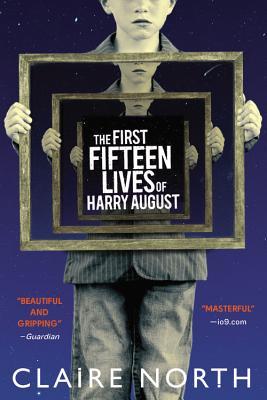
And another year comes to a close. We have read some great books this year, traveling around the world and through time. Our end of the year book is The First Fifteen Lives of Harry August. Suzi hosted the dinner in her charming holiday decorated cottage, with comfortable chairs, pillows and books galore! Lots of interesting discussions on what you would would do if you could relive your life, what choices would you make, how would you do things different and why? The discussion was lively, the soups/salads were delicious and the treats oh so yummy. It was a most gay and delightful way to say farewell to 2014 and welcome in the new year and new reading.


December 2014 Book Choice

Our end of the year book choice is very exciting: The First Fifteen Lives of Harry August
by Claire North

The First Fifteen Lives of Harry AugustSOME STORIES CANNOT BE TOLD IN JUST ONE LIFETIME.
Harry August is on his deathbed. Again.

No matter what he does or the decisions he makes, when death comes, Harry always returns to where he began, a child with all the knowledge of a life he has already lived a dozen times before. Nothing ever changes.
Until now. 
As Harry nears the end of his eleventh life, a little girl appears at his bedside. "I nearly missed you, Doctor August," she says. "I need to send a message."
This is the story of what Harry does next, and what he did before, and how he tries to save a past he cannot change and a future he cannot allow.


I am Malala Book Club Dinner

Friday November 7, Kitty hosted our book club dinner in modern cottage complete with outdoor seating and indoor lounging. Malala seems to be everywhere right now and this book provided a lot of in sight into who this young girl is and where she came from. The book opens and closes with the shooting and takes you on the journey of survival, rehabilitation, recovery and rebirth. We talked about the story from the parent's point of view too, which was a very interesting discussion. It was different to read a book that is so very current.

Completely unrelated to the book Rory brought a crazy yummy pie from Apple Hill!


October/November 2014 Book Choice

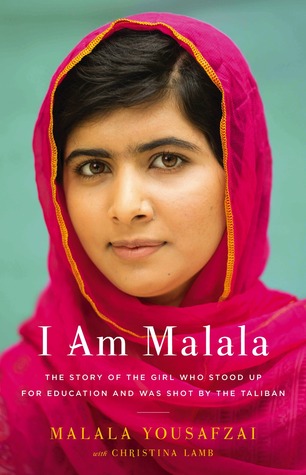
Our October/November book choice is I Am Malala: The Girl Who Stood Up for Education and Was Shot by the Taliban  by Malala Yousafzai, Christina Lamb

I come from a country that was created at midnight. When I almost died it was just after midday.

When the Taliban took control of the Swat Valley in Pakistan, one girl spoke out. Malala Yousafzai refused to be silenced and fought for her right to an education.
On Tuesday, October 9, 2012, when she was fifteen, she almost paid the ultimate price. She was shot in the head at point-blank range while riding the bus home from school, and few expected her to survive. 
I Am Malala: The Girl Who Stood Up for Education and Was Shot by the TalibanInstead, Malala's miraculous recovery has taken her on an extraordinary journey from a remote valley in northern Pakistan to the halls of the United Nations in New York. At sixteen, she has become a global symbol of peaceful protest and the youngest-ever Nobel Peace Prize laureate.
I Am Malala is the remarkable tale of a family uprooted by global terrorism, of the fight for girls' education, of a father who, himself a school owner, championed and encouraged his daughter to write and attend school, and of brave parents who have a fierce love for their daughter in a society that prizes sons.

And the Mountains Echoed September Book Dinner

Our September book club dinner was held at Molly's elegant abode with lots of delicious treats both savory and sweet. This book allowed for a lot of discussion regarding how our lives connect and influence each other-stories building on stories. People had favorite characters and characters that they found to be just awful. Interesting twists and turns. The structure of the book almost reads like a series of short stories but they we all connected in global setting.

September Book Choice

We took a vote and picked our next 6 books taking us through the fall of 2014 and into early spring 2015.
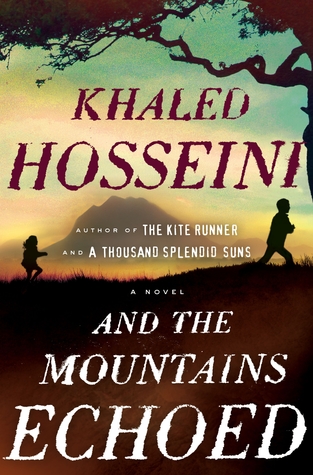
Our September book is And the Mountains Echoed by Khaled Hosseini

Khaled Hosseini, the #1 New York Times–bestselling author of The Kite Runner and A Thousand Splendid Suns, has written a new novel about how we love, how we take care of one another, and how the choices we make resonate through generations. 

And the Mountains Echoed
In this tale revolving around not just parents and children but brothers and sisters, cousins and caretakers, Hosseini explores the many ways in which families nurture, wound, betray, honor, and sacrifice for one another; and how often we are surprised by the actions of those closest to us, at the times that matter most. 


2013 Goodreads choice for Fiction of the year.
Paris Review best of 2013

Sunday

Behind the Beautiful Forevers: Life Death and hope in Mumbai Undercity

We had a lovely evening at the Hasting household at the end of August to discuss Behind the Beautiful Forever's.  Several members of the group were absent due to vacations and other summer activities so we were a bit of a small group.  But a lively discussion was had.  We ate dinner out back until we  heard the  spray planes and headed inside for cover.   We discussed the characters of this non-fiction book and how unbelievable their living conditions were.  Some of us found the book a bit depressing but some found it inspiring that people can survive anywhere.  The day to day survival of these people was more then most of us could even imagine- living in trash, seeing dead bodies and people lighting themselves on fire.  Everyone agreed it was well written and read like fiction. Like all good books, we were introduced to new places and new experiences. 

The food was a mix of Indian cuisine, vegetables , rice, salad and a dump cake (they lived in a dump) plus an interesting after- dinner tea.  Overall a good read, great food  and a good gathering.

Next month we are reading And The Mountains Echoed by Khaled Hosseini.  The meeting will be at Molly's house on September 26th. 


Thursday

August Book Choice 2014


Our late summer reading choice is "Behind the Beautiful Forevers" here is what the NY Times had to say about this powerful story...

Katherine Boo writes in “Behind the Beautiful Forevers,” her exquisitely accomplished first book. Novelists dream of defining characters this swiftly and beautifully, but Ms. Boo is not a novelist. She is one of those rare, deep-digging journalists who can make truth surpass fiction, a documentarian with a superb sense of human drama. She makes it very easy to forget that this book is the work of a reporter.

Half an acre. 335 huts. 3,000 people. And a concrete wall that is supposed to hide them from view: this is Annawadi, the Mumbai slum that comes vibrantly to life in this book’s pages. Ms. Boo says that she chose Annawadi because the scale of this “sumpy plug of slum” bordering a lake of sewage was small, and its location was fraught with possibilities. Annawadi sits beside the road to the Mumbai airport, on “a stretch where new India and old India collided and made new India late.” In 2008, at the time the events in the book unfolded, scavenging and trash sorting were the children of Annawadi’s most promising career choices.
Without condescending to her subjects in the slightest, Ms. Boo explains that dreams of upward mobility are just barely possible in Annawadi. And Zehrunisa’s family has set out to renovate the kitchen of the hut in which they live. The book takes its peculiar title from sunshine-yellow ads for ceramic tile that are painted on the concrete wall that hides Annawadi: the ad series repeats the words “Beautiful” and “Forever.” Behind those “beautiful forevers,” Zehrunisa wants some of that tile for her own.
The book’s cover, with an image of abject squalor, does not do justice to its agile prose, wry tone and surprisingly upbeat theatrics. Comparison to Dickens is not unwarranted.

Sunday

June 2014 Bookclub Dinner

A cooling Delta breeze created the visitors as the arrived to celebrate the May June book choice "Mr. Penumbra's 24 Hour Bookstore" at Michele's home of loveliness. It was a small but lively group with a variety of Google inspired salads and NYC vs SanFran. dishes as well as sourdough bread and the classic Rice a Roni . What do you read "on" an electronic devise or an actual printed book? Is one better than the other? What is the future of bookstores? These and many other questions were discussed. Also we are setting our plans for the next 5 selections taking us into 2015!


Thursday

May-June 2014 Book Club Choice

May June is always a very busy time for many of our group members so we decided to add extra reading time to this choice. Our book is Mr. Penumbra's 24 Hour Bookstore by Robin Sloan

Here is a bit of the NY Time review December 2012

We take an arrogant pleasure in the notion we might be the generation that renders so ancient a technology obsolete. “Mr. Penumbra’s 24-Hour Bookstore,” by Robin Sloan, dexterously tackles the intersection between old technologies and new with a novel that is part love letter to books, part technological meditation, part thrilling adventure, part requiem.

Clay Jannon, an unemployed Web designer, takes a job working the graveyard shift at a 24-hour bookstore, owned by the strange Mr. Penumbra. The store is just as inscrutable, with two kinds of customers — random passers-by who stop in so rarely Clay wonders how the store is able to stay open and a furtive “community of people who orbit the store like strange moons. . . . They arrive with algorithmic regularity. They never browse. They come wide-awake, completely sober and vibrating with need.” These customers borrow from a mysterious set of books, which Clay has been warned not to read. He surrenders to his curiosity and discovers that the books are written in code. With the help of his roommate, a special effects artist; his best friend, a successful creator of “boob-simulation software”; and his romantic interest, Kat Potente, who works for Google in data visualization, our likable hero goes on a quest.

“Mr. Penumbra’s 24-Hour Bookstore” is eminently enjoyable, full of warmth and intelligence. Sloan balances a strong plot with philosophical questions about technology and books and the power both contain. The prose maintains an engaging pace as Clay, Mr. Penumbra and the quirky constellation of people around them try to determine what matters more — the solution to a problem or how that solution is achieved.

There are charming moments. When the friends are staking out the Unbroken Spine, Clay observes, “Kat bought a New York Times but couldn’t figure out how to operate it, so now she’s fiddling with her phone.” We are reminded there are two kinds of people — those who function in an analog world and those who are so enamored with technology they cannot.

April Book Group Meeting

For our April Book Group we met at Betsy's Sunset Magazine home and enjoyed a lovely meal and a sparkling  book discussion. Originally planned for outside but moved indoors because of the possible threat of rain, the gathering was intimate and lively. One of our big surprises for the evening was no one brought Chinese food!

This poetic/operatic sad tale captured our hearts and made for an interesting discussion regarding making good-bad choices and bad-good choices.

Saturday

April 2014 Book Group - Songs of Willow Frost

A Talk with Jamie Ford, Author of Songs of Willow Frost
Your debut Hotel on the Corner of Bitter and Sweet sold over 1.3 million copies, was on the New York Times bestseller list for over two years, won the Asian Pacific American Award for Literature, and was even transformed into a popular stage play. Why do you think it resonated so deeply with readers across the country? Are there any particularly memorable or surprising reactions that you’d like to share?
At its core, Hotel is a love story—or actually a love-lost-and-then-found story, which I think everyone can relate to on some level. There’s a reason why people try to lose 20 pounds before class reunions. There are just some people in our lives whom we love, and lose, and unfailingly long for. They orbit our hearts like Halley’s Comet, crossing into our universe only once, or if we’re lucky, twice in a lifetime. Hotel also deals with race relations during an oft-forgotten period in US history. As a researcher and storyteller, I like turning over rocks and looking at the squishy things underneath. I think others do too.
As far as memorable reactions, here are three that immediately come to mind:
 1) Being invited to the Minidoka Reunion (Minidoka was an internment camp outside Twin Falls, Idaho), where former internees had a karaoke night where they sang Don’t Fence Me In.
2) Going to Norway and speaking to high school students who were assigned the book, which was surreal.
 3) A sansei (third generation Japanese American) woman sharing that she had read the book to her mother, a former internee, while she’d been in hospice, and that the book was the first time they’d talked about “camp.”
 Hotel has been described as “a wartime-era Chinese-Japanese variation on Romeo and Juliet” (Seattle Times). In what ways is Songs of Willow Frost a different kind of love story, and why did you want to turn to this narrative next?
If I were to create a perfume, it would come in a cracked bottle and be called Abandonment. That’s how Songs of Willow Frost opens. It’s another love story—and while there are boy-meets-girl aspects to the tale, the real love story is about a mother and her son, and about how two people can be so close, yet so far away from each other, and ultimately so misunderstood. I don’t think we ever really understand our parents until they’re gone—at least that’s been my experience. William experiences that loss, and it affects him profoundly. But then he has something many of us don’t get—the opportunity to find his mother again, to see her through new eyes.
Willow breaks into the movie industry at a studio in Tacoma, WA. What was Washington’s role in early American film? Does it still bear the footprint of that era?
Before the film industry coalesced in Southern California, there were viable studios in unusual places, like Minnesota, Idaho, and even Tacoma, WA., where H.C. Weaver Productions has long been forgotten. Early in the research process I called the Washington Film Office, and they told me the first film shot in Washington State was Tugboat Annie (1933). I’d read about movie crews on Mt. Rainier around 1924, so I knew the film office information was off. I kept digging and found press clippings which led to the H.C. Weaver production stage, which at the time was the third-largest freestanding film space in America (the larger two were in Hollywood). H.C. Weaver produced three films, Hearts and Fists (1926), Eyes of the Totem (1927), and The Heart of the Yukon (1927). These silent films were tied up in distribution and unfortunately released when talkies were overtaking their silent predecessors. The studio closed its doors as the roaring 20s stopped roaring. The building was converted into an enormous dance hall, which burned to the ground in 1932. The films have all been lost, though the Tacoma Public Library has a wonderful collection of production shots by Gaston Lance, the studio’s art director.
You have said that Liu Song/Willow is also an amalgamation of your own mother and Chinese grandmother. Are there particular real-life experiences that work their way into your story, and what was it like to write with them in mind?
I come from a family of big families. Both of my Chinese grandparents had more siblings than you could count on one hand, yet my father was an only child. The reason for that is because my Chinese grandmother had a backroom “procedure” that left her unable to bear more children. And yet my grandmother was fierce. She was an alpha-female at a time where it was perhaps culturally and socially unacceptable, but in America, as a U.S. citizen, she could become something different. That said, as a Chinese woman, she was still minority within a minority, and unable to receive proper medical care. My mom on the other hand was Caucasian. But she was dirt-poor—so poor that when she became pregnant with my oldest sister, she could only dream of giving birth in an actual hospital. That dream went unfulfilled, as her husband at the time gambled away the money she’d saved for the delivery. But, like my grandmother, she picked herself up after every setback, after every sacrifice. There are elements of both of them in Willow—in the kinds of challenges she faces, and the determination with which she faces them, and survives.
 What do you hope readers take away from Songs of Willow Frost?
I hope they’re equally entertained and enlightened. I hope they value their time spent with Willow and William. And I hope they see growth in me as a writer. Is that too much to hope for? I mean, before the Beatles wrote Abbey Road they were singing, “She loves you, yeah-yeah-yeah.” We all have to start somewhere.