Monday

May 2018 Book Selection

Little Fires Everywhere by Celeste Ng was the May Beehive book choice. Here is a brief selection of what NY Times book reviewer Eleanor Henderson thought of this novel (2017)


"Readers of Celeste Ng’s second novel, “Little Fires Everywhere,” will recognize a few elements from her acclaimed debut, “Everything I Never Told You.” There are the simmering racial tensions and incendiary family dynamics beneath the surface of a quiet Ohio town. There are the appeal and impossibility of assimilation, the all-consuming force of motherhood and the secret lives of teenagers and their parents, each unknowable to the other.

Image result for little fires everywhereAnd there’s a familiar frame, too: At each novel’s opening, we know at least part of the tragedy that will befall the characters — the mystery lies in figuring out how they got there. In “Little Fires Everywhere,” we begin not with a death but a house fire, and new questions: Who set it, and why?

The house belongs to Elena and Bill Richardson, a wealthy white couple who epitomize success in picture-perfect, late-’90s Shaker Heights, and their four teenage children, including girl-next-door Lexie and the troubled prankster Izzy, who is suspected of arson. 

It’s Mia and Pearl’s arrival in town 11 months earlier that ignites the story. Mia is an alluring Hester Prynne, a misfit nomad whose scarlet A might stand for Artist. She and Pearl have traveled the country in their VW Rabbit with little more than Mia’s camera, living in dozens of towns before settling in Shaker Heights, where Mia promises her daughter they will stay.

The magic of this novel lies in its power to implicate all of its characters — and likely many of its readers — in that innocent delusion. Who set the little fires everywhere? We keep reading to find out, even as we suspect that it could be us with ash on our hands." 

the Beehive Book Group Dinner was hosted by: 


April 2018 Book Choice

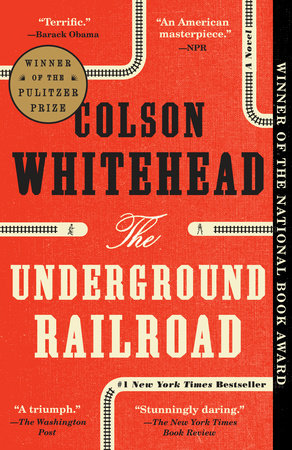
The Underground Railroad by Colson Whitehead was the April beehive book choice. This rich, complex, magical realism approach to American History was fresh and heartbreaking. Here is brief selection of what NY Times book review Juan Gabriel Vasquez had to say/write in Aug 2016.

Image result for underground railroad novel"Colson Whitehead’s novels are rebellious creatures: Each one of them goes to great lengths to break free of the last one, of its structure and language, of its areas of interest. At the same time, they all have one thing in common — the will to work within a recognizable tract of popular culture, taking advantage of conventions while subverting them for the novel’s own purposes. “The Intuitionist,” with its dystopian concerns and futuristic mood, gave way to the folkloric past of “John Henry Days”; “Zone One,” Whitehead’s contribution to the unquenchable American thirst for zombies, was his departure from “Sag Harbor,” with its coming-of-age feeling and concessions to nostalgia. His new novel, “The Underground Railroad,” is as different as can be from the zombie book. It touches on the historical novel and the slave story, but what it does with those genres is striking and imaginative. Like its predecessors, it is carefully built and stunningly daring; it is also, both in expected and unexpected ways, dense, substantial and important.

The central conceit of the novel is as simple as it is bold. The underground railroad is not, in Whitehead’s novel, the secret network of passageways and safe houses used by runaway slaves to reach the free North from their slaveholding states. Or rather it is that, but it is something else, too: You open a trap door in the safe house or find the entrance to a hidden cave, and you reach an actual railroad, with actual locomotives and boxcars and conductors, sometimes complete with benches on the platform. “Two steel rails ran the visible length of the tunnel,” Whitehead writes, “pinned into the dirt by wooden crossties. The steel ran south and north presumably, springing from some inconceivable source and shooting toward a miraculous terminus.” The trains pass at unpredictable times and go to unpredictable places, but that is obviously good enough for those wanting to flee the misery and violence of slavery: its sheer inhumanity, a word that in Whitehead’s unflinching explorations seems to fill up with new meanings." 

Kitty hosted at her lovely and inviting cottage. 


February/March 2018 Book Choice

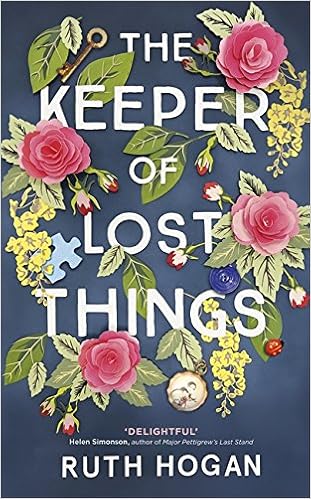
Keeper of Lost Things by Ruth Hogan was the selection for February/March. Here is a brief overview by Erika Swyler/ Washington Independent Review 2017


Image result for keeper of lost things"Ruth Hogan’s debut novel, The Keeper of Lost Things, asks readers to imagine a world in which the “lost things” are, in fact, people. The book’s message is that with great care and assistance, all might eventually find their place. It’s a charming notion and one which Hogan tackles gamely, if not always believably.
The author approaches the story as a dual narrative spanning 40 years. In the modern day, the novel centers around Anthony, an aging man who has spent his life collecting lost things and mourning his long-deceased fiancée; and Laura, his secretary-turned-housekeeper, a middle-aged woman recovering from a bad divorce. In the 1970s, we follow Eunice, secretary and lifelong best friend of affable publisher Bomber, who can never return her romantic interest.
Anthony bequeaths to Laura all his worldly possessions and his aptly named mansion, Padua, with one directive: that she continue his work of collecting discarded objects and do her best to return those items to their original owners. What follows is Laura’s journey through grief over Anthony and her failed marriage to a place of self-discovery." 

The Book Group dinner party was hosted by: 


Wednesday

January 2018 Book selection and gathering

The New Year starts with a Horror Novel Slade House by David Mitchell here is the NPR book reviewer Jason Sheehan/2015 :

"This is Slade House, the newest novel from David Mitchell — who wrote the beautifully twisty Cloud Atlas and The Bone Clocks. He's a stylist, a seemingly effortless imaginer of weirded-up nonsense and navigator extraordinaire of the multiple POV school of plots and schemery. As a matter of fact, "beautifully twisty" is pretty much Mitchell's trademark these days. And Slade House does nothing to tarnish his rep.

It's a horror novel. A ghost story. A haunted house book through and through (which is something you just don't see that much anymore), that covers the years 1979 to 2015 with check-ins every nine years and a different main character with each revolution.

Image result for slade house bookWhy nine years? Because every nine years the Ghosty McGuffin's Magical Nonsense Generator operating in the spooky house's attic must be recharged with fresh soul energy. Because every nine years a new "engifted" person must be lured through the magical doorway to Slade House (which, also, only appears every nine years because MAGIC!) to be tricked, drugged and devoured by the creepy, bickering, wise-ass twins who "live" there in order to keep them immortal for another almost-decade.

The story is told through the repeating mechanic of a dozen-some disappearances over 36 years. That reporter mentioned up top? She's trying to find her sister — who disappeared nine years before her own fateful night in that pub near Slade Alley and Slade House — and she spends forty-odd pages making (internal) fun of the crazy old man telling her stories about astral projection and immortal vampires.

The less you know about that going in the better, because all the joy in Slade House is in the discovery. It's in seeing different people make the same mistakes over and over again — in seeing the same story play out, the same weaknesses be preyed upon, the same arrogance of the twins who have been doing this for decades. It's in thinking that you'd be smarter, of course. That you'd see through all this B-movie schlock (like creepy portraits, sad ghosts and stairways that go nowhere), find the secret door, and escape." 

Dinner was hosted by:


Sunday

November December 2017 Book Choice

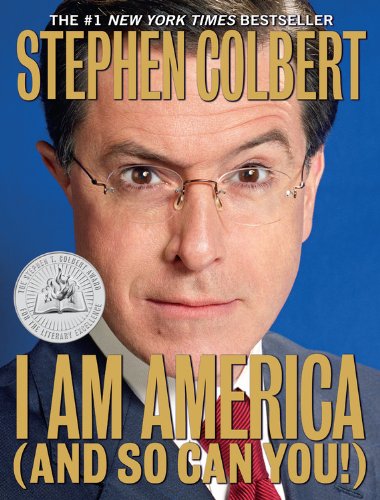
Our last book for 2017 is  I Am America (and so can you) by Stephen Colbert

“I Am America” describes “heroes” as “people who did not skip ahead” to that speech “but read the book from start to finish as intended.” Heroism aside, to experience the speech in print is to understand what “I Am America” is missing.Mr. Colbert and his staff write for a particular character with impeccable, deadpan delivery, and there is no book-worthy equivalent of what happens when the real McCoy gets near a microphone. The printed speech falls surprisingly flat. Neither this chapter nor the rest of “I Am America” is helped by little red annotations in the margins, though these, too, mimic a tactic that happens to be funny on TV.
Image result for i am america and so can youmong the funnier sections is the “Higher Education” chapter. It includes what purports to be Mr. Colbert’s college application essay, featuring ripe malapropisms, overuse of a thesaurus (“the apex, pinnacle, acme, vertex, and zenith of my life’s experience”) and the lying claim that his great-great-uncle’s name is on a building at Dartmouth. There are also fake course selections with student annotations, among them “Ethnic Stereotypes and the Humor of Cruelty” (“A professor will tell you a bunch of hilarious jokes, and you’re not allowed to laugh”) and “Dance for Men.” (“Go ahead. Break your mother’s heart.”) Heterosexuality that protests too much is a big part of the official Colbert attitude...If “I Am America (And So Can You!)” had nothing but its title, its Colbert cover portrait and 230 blank pages instead of printed ones, it would make a cherished keepsake just the same."

2007 NY Times book review


Betsy will once again host the Holiday Cookie Exchange end of the year party.


October November 2017 Book Choice

Our late fall book choice is A Tale for the Time Being by Ruth Ozeki

"If a Japanese-American writer who is also a Zen Buddhist priest wrote a post-Japanese tsunami novel, what themes might you imagine she would address? Biculturalism, water, death, memory, the female predicament, conscience, the nature of time and tide? Tick. All there. Throw in the second world war, the reader-writer relationship, depression, ecological collapse, suicide, origami, a 105-year-old anarchist nun and a schoolgirl's soiled knickers, and you have Ruth Ozeki's third novel, A Tale for the Time Being.


Image result for a tale for the time being reviewOzeki's meditative, era-flipping story starts with a chance discovery by a Japanese-American novelist called Ruth. Ruth lives on an island in British Columbia. Walking on the beach she stumbles on a barnacle-studded wad of plastic bags protecting a Hello Kitty lunchbox. Inside are some old letters and the diary of 16-year-old Nao (pronounced "now") Yasutani, who describes herself as "a little wave person. Floating about on the stormy sea of life"...
Seen from space, or from the vantage point of those conversant with Zen principles, A Tale for the Time Being is probably a deep and illuminating piece of work, with thoughtful things to say about the slipperiness of time. But for those positioned lower in the planet's stratosphere, Ozeki's novel often feels more like the great Pacific gyre it frequently evokes: a vast, churning basin of mental flotsam in which Schrödinger's cat, quantum mechanics, Japanese funeral rituals, crow species, fetish cafes, the anatomy of barnacles, 163 footnotes and six appendices all jostle for attention. It's an impressive amount of stuff." 

The Guardian Book Review March 2013

Kim hosted the Dinner Party


September October 2017 Book Choice

Our September October book choice is Commonwealth by Ann Patchett

"In the most vivid chapter of Ann Patchett’s rich and engrossing new novel, “Commonwealth,” it is 1971 and six step ­siblings ranging in age from 6 to 12 years old have been left to their own devices. Their blended family is on a car trip, staying in a motel near a lake, and the parents — the beautiful, overwhelmed mother of two of the girls and the affably selfish father of two more girls and two boys — have left a note that reads We’re sleeping late. Do not knock. Thus the children eat breakfast at a diner, then gather supplies, including soda, candy bars, a gun and a fifth of gin, and hike to the lake, where they spend several hours swimming and leaping from a high rock.

Image result for commonwealth bookPatchett wisely underplays the drama — the chapter is a masterly example of showing rather than telling — and the increasingly shocking details speak for themselves.

Her observations about people and life are insightful; and her underlying tone is one of compassion and amusement. If “Commonwealth” lacks the foreign intrigue of “Bel Canto” or “State of Wonder,” both of which took place in South America and contained more suspense, this novel, much of which unfolds in American suburbs, recognizes that the passage of time is actually the ultimate plot. As anyone who has attended a high school reunion knows, people themselves don’t need to have been doing anything particularly interesting in order for their lives to generate interest, so long as you run into them at infrequent enough intervals. Patchett also skillfully illustrates the way that seemingly minor, even arbitrary deci­sions can have long-lasting conse­quences and the way that we often fear the wrong things." 

NY times book review September 2016


Michele hosted the Dinner Party 


Monday

August September 2017 Book Choice

Late summer book choice was A Man Called Ove by Fredrik Backman
(we also read another book by him - My Grandmother asked me to tell you she's sorry)
Here is a NYTimes 2016 review

Fredrik Backman got tepid responses when he sent out the manuscript for his debut novel, “A Man Called Ove.” Most publishers ignored him, and several turned it down.
After a few months and a few more rejections, he began to think perhaps there wasn’t a market for a story about a cranky 59-year-old Swedish widower who tries and fails to kill himself.
Image result for a man called ove“It was rejected by one publisher with the line, ‘We like your novel, we think your writing has potential, but we see no commercial potential,” said Mr. Backman, 35, who lives outside Stockholm with his wife and two children. “That note I kept.”
In hindsight, that critique seems wildly, comically off base. Four years later, “A Man Called Ove” has sold more than 2.8 million copies worldwide, making the book one of Sweden’s most popular literary exports since Stieg Larsson’s thriller “The Girl With the Dragon Tattoo.”
The novel’s protagonist, Ove, is a lonely curmudgeon who screams at his neighbors for parking in the wrong place and punches a hospital clown whose magic tricks annoy him. Six months after his wife’s death, he’s planning to commit suicide and has turned off his radiators, canceled his newspaper subscription and anchored a hook into the ceiling to hang himself. But he keeps getting interrupted by his clueless, prying neighbors. He strikes up a friendship with an Iranian immigrant and her two young daughters, who find Ove’s grumpiness endearing.

Peter Borland, who acquired United States rights to “Ove” for Atria, said he was struck by the book’s pathos and humor.

Image result for a man called ove


https://www.youtube.com/watch?v=dPoaN2XROk8

Molly Hosted the Dinner Party: 

June/July 2017 Book choice

Our first summer read was a historic foodie book Thomas Jefferson's Creme Brulee by Thomas J. Craughwell 

Here is a brief overview by Goodreads:

Image result for thomas jefferson and creme bruleeThis culinary biography recounts the 1784 deal that Thomas Jefferson struck with his slaves, James Hemings. The founding father was traveling to Paris and wanted to bring James along “for a particular purpose”— to master the art of French cooking. In exchange for James’s cooperation, Jefferson would grant his freedom. 

Thus began one of the strangest partnerships in United States history. As Hemings apprenticed under master French chefs, Jefferson studied the cultivation of French crops (especially grapes for winemaking) so the might be replicated in American agriculture. The two men returned home with such marvels as pasta, French fries, Champagne, macaroni and cheese, crème brĂ»lĂ©e, and a host of other treats. This narrative history tells the story of their remarkable adventure—and even includes a few of their favorite recipes! 


Sally hosted the dinner party 


May 2017 Book Choice

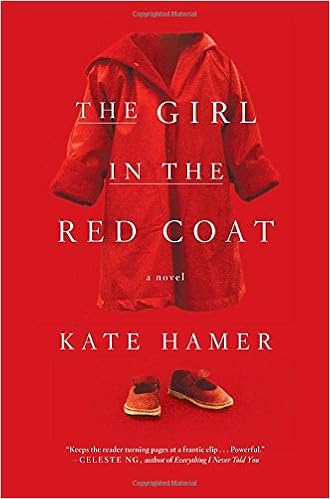
Our May 2017 book choice was The Girl in the Red Coat by Kate Hamer
Here is part of the 2015 book review from the Guardian writer Celeste Ng 

Image result for girl in the red coatKate Hamer’s debut novel has the trappings of a thriller. Sensitive eight-year-old Carmel –the red-coated girl of the title – is spirited away by a man who claims to be her estranged grandfather. As Beth, her mother, desperately searches for her, Carmel realises that her kidnapper has not taken her at random: he believes she has a special gift. Told in the alternating perspectives of the grieving mother and the missing daughter, it keeps the reader turning pages at a frantic clip.
Image result for girl in the red coat
It’s no accident that the title calls to mind Little Red Riding Hood, the ultimate story of a young girl captured by a predator. Carmel is abducted from a storytelling festival, and both she and her mother make frequent reference to the fairytale nature of what’s happened. Beth wishes she’d kept her daughter “shut away in a fortress or a tower. Locked with a golden key that I would swallow.” Spotting her shadow on the wall beside her captor’s, Carmel muses: “We both look like the paper puppets … and I wonder what story we’d be telling if we were.” She steels herself by thinking: “Sometimes, it’s easier to think of things as stories … If I made these things into stories I could float away from them, and look at them sideways, or like they were happening inside a snow globe.”

Jeannie hosted the dinner party 


Friday

April 2017 Book post

The April 2017 book selection is Marriage of Opposites by Alice Hoffman.
Here is a brief review from Goodreads:

From the New York Times bestselling author of The Dovekeepers and The Museum of Extraordinary Things: a forbidden love story set on the tropical island of St. Thomas about the extraordinary woman who gave birth to painter Camille Pissarro; the Father of Impressionism.

Growing up on idyllic St. Thomas in the early 1800s, Rachel dreams of life in faraway Paris. Rachel's mother, a pillar of their small refugee community of Jews who escaped the Inquisition, has never forgiven her daughter for being a difficult girl who refuses to live by the rules. Growing up, Rachel's salvation is their maid Adelle's belief in her strengths, and her deep, life-long friendship with Jestine, Adelle's daughter. But Rachel's life is not her own. She is married off to a widower with three children to save her father's business. When her husband dies suddenly and his handsome, much younger nephew, Fréderick, arrives from France to settle the estate, Rachel seizes her own life story, beginning a defiant, passionate love affair that sparks a scandal that affects all of her family, including her favorite son, who will become one of the greatest artists of France.

Image result for marriage of oppositesBuilding on the triumphs of The Dovekeepers and The Museum of Extraordinary Things, set in a world of almost unimaginable beauty, The Marriage of Opposites showcases the beloved, bestselling Alice Hoffman at the height of her considerable powers. Once forgotten to history, the marriage of Rachel and Fréderick is a story that is as unforgettable as it is remarkable.


Kitty Hosted the Event:

Saturday

March 2017 Book!


The Ocean at the End of the Lane

Our next meeting is March 10th and our book is The Ocean at the End of the Lane by Neil Gaiman.

Sussex, England. A middle-aged man returns to his childhood home to attend a funeral. Although the house he lived in is long gone, he is drawn to the farm at the end of the road, where, when he was seven, he encountered a most remarkable girl, Lettie Hempstock, and her mother and grandmother. He hasn't thought of Lettie in decades, and yet as he sits by the pond (a pond that she'd claimed was an ocean) behind the ramshackle old farmhouse, the unremembered past comes flooding back. And it is a past too strange, too frightening, too dangerous to have happened to anyone, let alone a small boy.

Forty years earlier, a man committed suicide in a stolen car at this farm at the end of the road. Like a fuse on a firework, his death lit a touchpaper and resonated in unimaginable ways. The darkness was unleashed, something scary and thoroughly incomprehensible to a little boy. And Lettie—magical, comforting, wise beyond her years—promised to protect him, no matter what.

A groundbreaking work from a master, The Ocean at the End of the Lane is told with a rare understanding of all that makes us human, and shows the power of stories to reveal and shelter us from the darkness inside and out. It is a stirring, terrifying, and elegiac fable as delicate as a butterfly's wing and as menacing as a knife in the dark.
 (less)

Friday

Books of 2016 Looking Back


The Books of 2016 Looking back...


Image result for loving frank book
February 2016

Image result for let's pretend this never happened book
March April 2016


Image result for drowning ruth book
May 2016

Image result for my grandmother told me to tell you she's sorry
June 2016

Image result for the girl with all the gifts book
August 2016 
Image result for rocket girl book
September 2016 
Image result for shakespeare saved my life
October 2016 
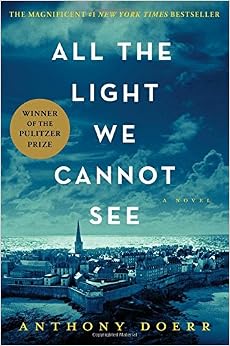
Image result for all the light we cannot see
November December 2016


Tuesday

October 2015 Book Choice

The Magician's Lie by Greer Macallister was the October 2015 Beehive book choice here are a few reviews:

At the pinnacle of her career, an early 20th-century magician known as the Amazing Arden astonishes the world by sawing a man in half onstage — or at least appearing to do so. “Who is this Amazing Arden?” the headlines ask.

Greer Macallister’s atmospheric novel tells the story of this fictional magician, whose talents make her one of the world’s most famous female masters of illusion. It’s a tale as spellbinding as any of Arden’s performances, with plenty of smoke and mirrors to confound and misdirect the reader.

“The Magician’s Lie” opens in 1905. Arden is preparing to dazzle an audience in Waterloo, Iowa, with her “Halved Man” trick. She will saw a man in half, blood will spurt from the wooden box in which he lies, and she will put him back together again. But this time she switches out the saw for an ax. “Tonight, I will escape my torturer, once and for all time. Tonight, I will kill him,” she confesses to the reader. (Her tormentor isn’t named, but who he is and what he has done to her are horrifying when finally revealed.)

Later that night, a man’s body, an ax buried in his chest, is found under the stage. The police’s prime suspect in the death is, not surprisingly, the Amazing Arden. The victim is said to be her husband. Arden flees Waterloo but is soon captured by a police officer.

‘The Magician’s Lie’ by Greer Macallister is a spellbinding tale...Washington Post 2015 

"Macallister is as much of a magician as her subject, misdirecting and enchanting while ultimately leaving her audience satisfied with a grand finale." -- Columbus Dispatch

"Greer Macallister's haunting first novel is a compelling mystery.... [her] painstaking descriptions of the costumes, technique and trickery involved in Ada’s work as an illusionist are unparalleled." -- BookPage review


"And for its next trick, the novel 'The Magician’s Lie' by Greer Macallister just might become a hit." -- The Christian Science Monitor

September 2015 Book Club dinner

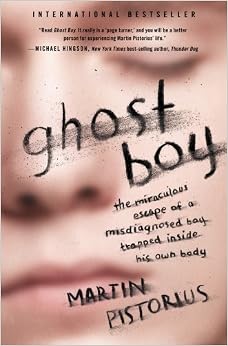
Our September book choice was Ghost Boy by Martin Pistorius an autobiographical account of his childhood illness and the misdiagnosis. Here is a part of the book review  


"In January 1988 Martin Pistorius, aged twelve, fell inexplicably sick. First he lost his voice and stopped eating. Then he slept constantly and shunned human contact. Doctors were mystified. Within eighteen months he was mute and wheelchair-bound. Martin's parents were told an unknown degenerative disease left him with the mind of a baby and less than two years to live.


Martin was moved to care centers for severely disabled children. The stress and heartache shook his


parents’ marriage and their family to the core. Their boy was gone. Or so they thought.

Ghost Boy is the heart-wrenching story of one boy’s return to life through the power of love and faith. In these pages, readers see a parent’s resilience, the consequences of misdiagnosis, abuse at the hands of cruel caretakers, and the unthinkable duration of Martin’s mental alertness betrayed by his lifeless body."


September Book Choice

Our September Book Choice is a true story called "Ghost Boy" by

here is an overview of the story:


Image result for ghost boy bookMartin Pistorius was a happy, healthy boy – until at the age of 12 a mystery illness left him in a virtual coma. Doctors never found the cause of his condition – even his mother gave up hope.

Yet in 1992, when Martin was 16, a miracle happened: he started to regain consciousness. But he was still trapped in his broken body, unable to communicate.

Slowly, however, he regained some control of his head and arms, and began to use a computer to write messages and operate a synthetic voice. Here, Martin tells the story of his remarkable recovery – and how he came to find love, a home and a job in England...


Seattle Beehive Trip and Book Group Dinner

Optional August Book Choice

We usually take August off but this year a few of us decided to journey up to Seattle to visit with Beehive founder Beth...so we picked a Seattle centered novel
Where'd You Go Bernadette by Maria Semple

 San Jose Mercury News Review-

"Where'd You Go, Bernadette," a novel by Maria Semple, is a challenging book to review -- or describe. It can be referred to as an epistolary novel (the story is told through e-mails, letters and notes); it can be described as a window into Seattle, where Microsoft, rain, coffee and obligation of community involvement permeate lives like the fog above Mount Rainer. But neither of those descriptions captures the delightful cleverness of the story.

The simple version of the plotline is: Bernadette Fox is missing. She is the mother of Balakrishna, "Bee" Branch and the wife of Elgin Branch, a Microsoft rock star. Bernadette is also an eccentric, creative genius who neither fits in with the Seattle vibe, nor the parents of her daughter's classmates. When Bee learns of her mother's disappearance, she reviews all documentation relating to Bernadette for clues. The novel is a compilation of those letters, e-mails, and reports unfolding the story of events which led to Bernadette fleeing Seattle. Any more detail divulges too much.

July Book Dinner 2015

Our July book group dinner was hosted by Lori at her lovely home, where we enjoyed a round table discussion, lots of great food choices and Lori provided maps and support text, making this a very educational and lively gathering.

July Book Choice

Our July Book Choice is the Sandcastle Girls by Chris Bohjalian.

Here is a brief overview of this novel:

The Armenian genocide during World War I is the subject of Chris Bohjalian’s 14th novel, “The Sandcastle Girls.” Inspired by his grandparents’ background, the author explores the suffering and atrocities of that time with astounding precision, compassion and grace.

“How do a million and a half people die with nobody knowing?” ponders Laura Petrosian, the book’s modern-day narrator. The answer, she will discover, is really very simple: “You kill them in the middle of nowhere.”
The novel covers several decades...

Bohjalian deftly weaves the many threads of this story back and forth from past to present, from abuse to humanity, from devastation to redemption. His ability to add irony and wit makes the contrasting horrors even more intense. And his unblinking descriptions of atrocities are staggering: Nevart “has heard stories of . . . women who were impaled on sharp stakes and swords, the pommel and grip planted into the ground so the blade rose like an exotic but lethal plant.” Rather than repelling the reader, Bohjalian’s account makes the gruesome truth utterly riveting.

April 24, 2015, will mark the 100th anniversary of the Armenian genocide. Yet in some circles, controversy over the nature of this crime still rages. Just this month, relations between France and Turkey were tested again by President Francois Hollande’s commitment to making it illegal to deny that the killing of Armenians by Ottoman Turks was genocide. Bohjalian’s “The Sandcastle Girls” may be a novel, but, based on his family history, it is a valuable and powerful piece of evidence pointing to the undeniable.


Washington Post

June 2015 Book Dinner

Simone hosted the first book group meeting for the summer of 2015 in her charming Cottage Garden.
We had a San Francisco inspired feast and lots of great discussions. The night was still but the group was sparking. I went home and watched the classic Bogart movie of the book and found it to be very true to the text.

June 2015 Book Club Choice

This month we have decided to read a classic The Maltese Falcon by Dashiell Hammett
Here is an overview and what critics have said about this novel...

The Maltese FalconA treasure worth killing for. Sam Spade, a slightly shopworn private eye with his own solitary code of ethics. A perfumed grafter named Joel Cairo, a fat man name Gutman, and Brigid O’Shaughnessy, a beautiful and treacherous woman whose loyalties shift at the drop of a dime. These are the ingredients of Dashiell Hammett’s coolly glittering gem of detective fiction, a novel that has haunted three generations of readers.
From the Publisher
“Dashiell Hammett . . . is a master of the detective novel, yes, but also one hell of a writer.” –The Boston Globe
The Maltese Falcon is not only probably the best detective story we have ever read, it is an exceedingly well written novel.” –The Times Literary Supplement(London)
“Hammett’s prose [is] clean and entirely unique. His characters [are] as sharply and economically defined as any in American fiction.” –The New York Times
New York Times Book Review
If the locution 'hard-boiled' had not already been coined it would be necessary to coin it now to describe the characters of Dashiell Hammett's latest detective story. . . there is plenty of excitement. -- Books of the Century; New York Times review, February 1930

Book Club Dinner

Deborah hosted our early spring book club dinner at her classic high water Victorian. Lots of lively conversation and tasty foods, the group was small but the spirit was big!

March April Book Choice


Our March April Book Choice is the first novel my author Antony Marra, " A Constellation of Vital Phenomena" 
Overview Washington Post Ron Charles-

The book begins with a sentence that forecasts both the horror and the whimsy ahead: “On the morning after the Feds burned down her house and took her father, Havaa woke from dreams of sea anemones.” Havaa, we learn, is 8 and now almost certainly orphaned. “She had the pale, waxen skin of an unripe pear,” Marra writes. Her father, who nurtured her curiosity with extravagant affection, was an arborist who had lost his fingers in a previous encounter with the Feds and a pair of bolt cutters. When he was gagged with duct tape and bundled away for good, Havaa avoided assassination by sneaking out of the house and hiding in the snow. But those thugs will be back, fulfilling a new order to murder the family members of anyone suspected of sympathizing with rebel forces.

The complicated moral hero of this tale is an incompetent peasant doctor named Akhmed, who lives across the street. More comfortable drawing portraits than blood, he is determined to save his old friend’s daughter, though “she seemed an immense and overwhelming creature whom he was destined to fail.” His only choice is to spirit Havaa out of the village, where the sole remaining career choices are running guns for the rebels or informing for the Russians. Acting on a rumor from a refugee who passed through months earlier, he takes Havaa to an all-but-abandoned hospital in a nearby town that looks “like a city made of shoeboxes and stamped into the ground by a petulant child.”

February March Book Club Dinner

Molly hosted our March gathering at her lovely villa, with lots of spice and candle light to ward away the rain. We all admitted to knowing very little about this president and or the situation that lead to his death. Lots of history twists and turns, plus great food and fellowship.